Greene County Court serves as the central authority for resolving legal matters at the county level. It handles a wide range of cases that affect daily life, from civil disputes to criminal proceedings. Through its judges and court staff, Greene County Court applies state law within a local setting. This role places the court at the heart of the Greene County judicial system. Residents often look to the court for fair rulings and reliable legal outcomes.
Greene County Court plays a steady role in maintaining order and public confidence in the county legal system. Attorneys rely on its structured procedures, clear schedules, and documented case activity. Researchers and record seekers depend on the court for accurate and timely information. In the middle of legal processes, Greene County Court acts as a trusted local court authority. Its ongoing work supports fairness, accountability, and respect for the rule of law.

How to Search Greene County Court Records
Most Greene County court records are public and can be searched online or at the courthouse using specific search tools and required information. With the right steps, a case lookup process can be completed accurately.
Official Court Records Search URL
Official Online Search:
Users can begin court record searches via the Greene County official civil records portal at https://greenecountypa.gov/civilsearch.
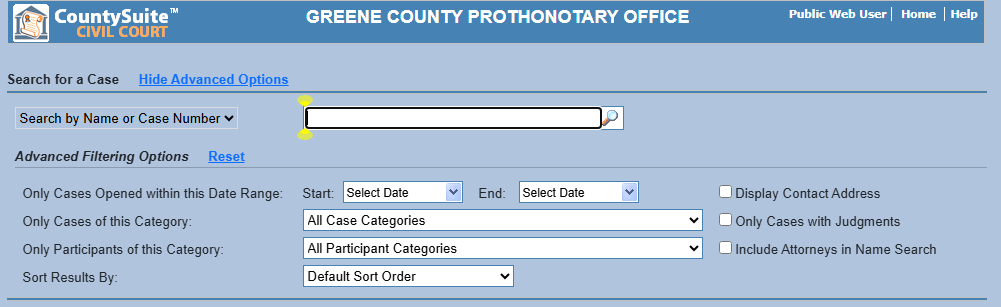
Steps to Online Search Process
- Open the official court search page:
Visit https://greenecountypa.gov/civilsearch in your web browser. - Accept disclaimers & proceed:
Click “Continue to the site” at any notice to use the public case search tool. - Select search fields:
You may enter a case number, party name (last and first), or other details available. - Refine by case type:
Use filters for other types of court matters if available (civil, criminal, etc.). - Submit the search:
Click the “Search” button to view matching records. - Review results:
Your results will list case docket summaries and available records. - View documents:
Cases with attachments will show icons indicating available documents.
Court Office Visits (In-Person)
Some records, especially older ones or those not available online, must be requested directly at the court.
Key Court Home Page:
Clerk of Courts for Greene County criminal and juvenile records is detailed at https://greenecountypa.gov/department-clerk-of-courts.
Steps for In-Person Search Process
- Prepare your information:
Bring names, case number (if known), and approximate filing dates. - Find the clerk’s office:
Clerk of Courts Office:
Address: Greene County Courthouse, 10 East High Street, Waynesburg, PA 15370. - Ask for the public terminal:
Court clerks provide access to digital terminals where users can run a court record search on site. - Review physical archives if needed:
For records before 1996, you must search miscellaneous indices or archive boxes manually. - Request printed or certified copies:
Complete a request form and pay any applicable fees (copy or certification).
What Is the Greene County Court Records
Greene County court records are official files created by local courts during legal cases and proceedings. These records preserve case activity, decisions, and filings tied to civil, criminal, family, and probate matters. Greene County court records form a written history of how the justice system handles disputes and legal actions within the county. Courts generate these records as cases move forward, creating reliable case documentation that reflects filings, hearings, and outcomes.
Judicial records Greene County courts maintain may include:
- Case filings and complaints
- Court orders and judgments
- Docket entries and hearing schedules
- Motions, responses, and rulings
- Sentencing records in criminal cases
Why Greene County Court Records Matter
Court records support transparency and consistency across the local justice system. Judges, attorneys, and clerks rely on these records to track case progress and confirm legal actions.
For residents, Greene County court records help confirm facts tied to legal matters. They offer written proof of outcomes, dates, and responsibilities set by the court. This makes them a trusted reference during disputes or follow-up actions.
Common Uses of Judicial Records in Greene County
Greene County court records serve many practical purposes across personal, legal, and professional needs.
Typical uses include:
- Legal research to review similar cases or past rulings
- Background checks for employment, housing, or licensing
- Personal verification of judgments, fines, or case status
- Property and probate review during estate matters
- Appeal preparation by reviewing earlier filings
What Information Appears in Official Court Records
Most Greene County court records list:
- Case number and filing date
- Names of involved parties
- Assigned judge or division
- Event history and docket notes
- Final rulings or dispositions
Types of Court Records in Greene County
Court case records in Greene County cover a wide range of legal matters handled by local courts. Each record type serves a specific purpose and reflects the nature of the case filed with the court. These records help courts document proceedings, rulings, and case progress without exposing protected or private details.
Civil Case Files
Civil case files relate to disputes between parties where no criminal charges apply. These cases usually involve private rights, responsibilities, or financial claims.
Common civil case files include:
- Contract disagreements
- Property or boundary disputes
- Personal injury claims
- Small claims and debt cases
- Landlord and tenant matters
Criminal Records
Criminal court case records involve cases where the state or county files charges against a defendant. These records document the legal process from arrest through resolution.
Criminal records may include:
- Case filings and charge descriptions
- Court appearances and hearing dates
- Plea entries and trial outcomes
- Sentencing summaries
Family Court Documentation
Family court documentation focuses on cases involving domestic relationships and household matters. These records require careful handling due to privacy concerns.
Family-related court case records often cover:
- Divorce and legal separation
- Child custody and visitation
- Child support and spousal support
- Adoption filings
- Protective or restraining orders
Probate Records
Probate records deal with estate administration after a person’s death. These court case records confirm how property and responsibilities transfer to heirs or beneficiaries.
Probate and estate files may include:
- Wills submitted for review
- Executor or administrator appointments
- Asset inventories
- Estate settlement orders
Traffic and Minor Offense Records
Traffic and minor offense records document cases related to driving violations and local ordinance issues.
Examples include:
- Speeding or citation cases
- License-related violations
- Municipal code offenses
Judicial Authority and Responsibilities
Court authority in Greene County defines how judges manage cases, apply the law, and issue binding decisions. This authority comes from state law and gives judges the power to oversee legal disputes within set limits. Judges in Greene County act as neutral decision-makers who manage court proceedings and resolve cases based on facts, evidence, and legal rules.
Source and Scope of Court Authority
Court authority in Greene County flows from Pennsylvania statutes and the state constitution. Each court receives legal jurisdiction that limits what types of cases it may hear. Jurisdiction refers to the court’s legal reach over people, locations, and case subjects.
Greene County courts hold authority over matters that arise within county boundaries. This includes disputes between residents, offenses committed locally, and property located in the county.
Legal jurisdiction determines:
- Which court handles a case
- What laws apply
- How far judicial powers extend
Judicial Powers of Greene County Judges
Judges exercise judicial powers during every stage of a case. These powers allow them to manage proceedings and maintain fairness in the courtroom.
Key judicial powers include:
- Interpreting state and local laws
- Presiding over hearings and trials
- Ruling on motions and objections
- Weighing evidence and testimony
- Issuing orders, judgments, and sentences
Types of Cases Managed by the Court
Greene County judges oversee a wide range of cases based on court level and assignment. Each case type follows its own procedures and legal standards.
Common case categories include:
- Civil disputes such as contracts or property claims
- Criminal cases ranging from minor offenses to serious charges
- Family-related cases like custody or support
- Probate matters involving estates and wills
- Traffic violations and local ordinance cases
Public Accessibility and Record Availability
Record availability in Greene County depends on court rules, privacy laws, and case type. Many files remain open for public review, yet some stay limited to protect safety and private interests. Greene County courts balance openness with legal limits, so users may see full records, partial records, or no public view at all.
Public Court Records Available for Review
Public court records include many routine case files created during court proceedings. These records support transparency and allow residents to review case activity without special permission.
Common public court records include:
- Civil case filings and judgments
- Criminal case dockets for adult defendants
- Traffic violation records
- Probate filings such as wills submitted to court
- Final court orders and rulings
Restricted Files and Legal Limitations
Some records remain restricted by law. Courts limit these files to protect minors, victims, and sensitive personal data.
Restricted files often include:
- Juvenile court cases
- Adoption records
- Sealed criminal cases
- Mental health proceedings
- Certain family court documentation
These files do not appear in public systems. Court staff may confirm that a case exists, yet details stay private. Judges approve any release of restricted records, based on legal standards.
Timeframes for Record Availability
Record availability varies by case type and court division. Filing time, review steps, and court schedules affect when a record becomes visible.
Typical timelines include:
- New civil and criminal filings: 24–72 hours
- Court orders and judgments: same day or next business day
- Archived records: several days after request
Online vs. In-Person Record Retrieval
Court records access in Greene County happens through online portals or courthouse visits, and each method serves a different need. Digital searches work well for speed, while in-person requests suit detailed or older files. Both options support public court use, yet convenience, limits, and timing differ.
Digital Case Lookup Through Online Portals
Digital case lookup allows users to review many Greene County court files from home. Official court websites host searchable databases that display docket summaries, party names, filing dates, and case status.
Online record retrieval works best for:
- Recent civil and criminal cases
- Traffic and minor offense matters
- Basic docket details and hearing history
Search tools usually ask for a case number or party name. Results appear within seconds once the system loads. New filings may appear after court processing, often within one to three business days.
Courthouse Requests and On-Site Searches
Courthouse requests offer a more complete record search experience. The clerk of court offices maintain physical files, archived cases, and internal databases unavailable online.
In-person record retrieval fits situations such as:
- Older or archived case files
- Certified copy requests
- Records with limited online display
- File verification for legal use
Convenience, Limits, and Timing Comparison
- Online portals offer speed and ease, with no travel required. They work best for quick checks and general case information.
- Courthouse visits require more time, yet they offer depth and official verification. Certified copies and complete files usually come from this method.
Record Accuracy and Verification
Official court records in Greene County serve as the definitive account of legal proceedings and outcomes. Maintaining accuracy is critical because these records inform legal decisions, background checks, and personal verifications.
Importance of Verification
Verifying judicial record accuracy ensures that information reflects actual filings, rulings, and case developments. Errors or incomplete data can lead to misunderstandings, incorrect legal actions, or disputes over case status. Professionals, researchers, and the public rely on verified records for trustworthy information.
Updates and Frequency
Court records update as cases progress through hearings, motions, and rulings. Most online entries for Greene County cases refresh daily, typically within one to three business days after filings or court actions. Physical records in the courthouse reflect changes immediately once staff processes new documents.
Regular updates include:
- New case filings
- Court orders and judgments
- Scheduling changes or hearing updates
- Amendments or corrections to prior filings
Risks of Outdated or Incorrect Records
Relying on outdated court information can cause complications. For example, missing a recent judgment or misidentifying parties could affect legal strategies or personal verification processes. Online portals may display incomplete data temporarily, while older paper files may require verification at the courthouse.
Users are encouraged to cross-check records with the official court database or consult court staff when confirmation is necessary. Certified copies from the clerk’s office provide the most reliable record validation.
Legal and Privacy Considerations
The Greene County legal system balances public transparency with privacy protections. Court records provide valuable information, but access is regulated to safeguard individuals’ personal and sensitive data.
Privacy Protections in Court Records
Certain case types contain sensitive details that are restricted from public access. These protections prevent identity misuse, protect minors, and safeguard vulnerable parties. Examples include:
- Juvenile cases
- Adoption records
- Sealed criminal proceedings
- Family court matters with confidential details
Legal Restrictions and Lawful Access
The legal system enforces rules on who may view specific records and how information can be used. Accessing restricted records without proper authorization can violate state law. Courts may require written requests, court orders, or proof of legitimate need before releasing sensitive information.
Lawful access applies to:
- Researchers conducting approved legal studies
- Attorneys representing parties in a case
- Individuals requesting their own or authorized records
Responsible Use of Public Records
Even publicly available court records should be handled responsibly. Sharing or distributing personal details from records without consent can harm individuals and violate ethical or legal standards. Proper use includes:
- Reviewing records for personal verification or legal purposes
- Using information for authorized professional research
- Requesting certified copies when formal documentation is required
Structure of the Greene County Court System
The Greene County court system is organized to handle a wide range of legal matters efficiently, from minor disputes to complex criminal cases. Its structure defines the hierarchy of courts, the type of cases each court manages, and the pathway a case follows from filing to resolution.
Levels of Courts in Greene County
Greene County maintains several court levels, each with distinct roles:
- Magisterial District Courts: These are the first level of trial courts. They handle minor criminal offenses, traffic violations, landlord-tenant disputes, and small civil claims. Cases start here when initial complaints or citations are filed.
- Court of Common Pleas: This trial court manages more significant civil and criminal matters, family disputes, and probate cases. Judges in this court have broad judicial powers to hear evidence, issue rulings, and oversee trials. Examples include contract disputes, serious criminal charges, custody and support cases, and estate administration.
- Appellate Courts (State Level): Greene County cases can be appealed to higher state courts if one party contests the trial court’s decision. Appellate courts review the lower court’s record for legal errors but do not typically re-examine factual evidence.
How Cases Progress Through the Court System
Cases typically follow a defined path depending on their type and severity:
- Filing: A case begins with the submission of a complaint, petition, or criminal charge.
- Initial Hearings: Magisterial or trial courts review initial filings and schedule hearings.
- Trial or Settlement: For contested cases, courts hold hearings or trials where evidence and testimony are presented. Civil cases may also settle before trial.
- Judgment: The court issues rulings, orders, or sentences, which are recorded as official court records.
- Appeals (if applicable): Parties may appeal decisions to higher courts, following the legal framework for review.
Examples of Case Types
- Civil Cases: Contract disputes, property disagreements, personal injury claims, and small claims.
- Criminal Cases: Theft, assault, DUI charges, and serious felony offenses.
- Family Cases: Divorce, custody, child support, and adoption proceedings.
- Probate Matters: Wills, estate distribution, and executor appointments.
Location and Functions
The Greene County courthouse serves as the central hub for legal proceedings, administrative tasks, and public services within the county. It houses courtrooms, clerk offices, and departments responsible for managing court records, case filings, and other judicial functions.
Location and Contact Information
- Address: 10 East High Street, Waynesburg, PA 15370
- Phone: (724) 852-5300
- Office Hours: Monday–Friday, 8:30 AM – 4:30 PM
Key Departments and Functions
The Greene County courthouse hosts several departments that handle various administrative and judicial responsibilities:
- Clerk of Courts Office: Manages case filings, official court records, and certified copies.
- Prothonotary Office: Maintains civil case documentation, including judgments, liens, and filings.
- Register of Wills / Probate Department: Oversees estate administration, wills, and probate filings.
- Magisterial District Court Offices: Conduct hearings for minor civil and criminal matters, traffic violations, and small claims.
- Family Court Services: Handles custody, support, and domestic case management.
Public Interaction and Services
Visitors can access public terminals to search court case records, request certified copies, or review filings under applicable rules. Court staff assist with locating records, explaining procedures, and clarifying office requirements.
For in-person visits, it is recommended to bring accurate case details such as case numbers, party names, or filing dates to facilitate faster service. The courthouse also provides guidance for requesting restricted records, paying fees, and scheduling hearings.
Frequently Asked Questions
Greene County Court handles a wide range of civil, criminal, family, and probate matters, and residents often have questions about court records, access, and procedures. Below are common inquiries with clear explanations to help users navigate the system efficiently.
Are Greene County court records public?
Many Greene County court records are available to the public, including civil filings, criminal case dockets for adults, traffic violations, and probate documents. These records provide details such as case numbers, party names, filing dates, and hearing outcomes. Certain records, like juvenile cases, sealed files, and sensitive family court documents, remain restricted to protect privacy. Access to restricted records usually requires a court order or authorization.
How can I search Greene County court records online?
Users can perform online case lookups through the official Greene County court website. By entering a case number, party name, or filing date, users can retrieve summaries of civil, criminal, traffic, and probate cases. Online searches are most effective for recent filings, and results typically appear within one to three business days. Advanced filters help refine results, and public terminals at the courthouse provide access to older or more detailed records.
Can I view court records without a case number?
Yes, it is possible to search Greene County court records without a case number by using party names, filing dates, or case types. However, broader searches may produce multiple matches, so providing additional details like exact spellings, approximate filing years, or case category improves accuracy. Courthouse staff can assist with refining searches if needed.
How long does it take for new court records to appear?
Newly filed cases in Greene County generally appear online within one to three business days after processing by the clerk’s office. Court orders, docket updates, and judgments are often entered on the same day or the next business day. Older records may require in-person requests to access archives, which can take several days depending on retrieval methods.
Can I get certified copies of Greene County court records?
Certified copies of official court records are available through the clerk of courts or the prothonotary office. Requests usually require accurate case information, such as the case number, party names, or filing dates. Fees may apply, and some records may need prior authorization due to privacy restrictions. Certified copies are typically used for legal, administrative, or official verification purposes.
What types of cases does Greene County Court handle?
Greene County courts manage a variety of cases, including civil disputes like contracts or property claims, criminal cases from minor offenses to serious charges, family matters such as custody or divorce, probate filings for wills and estates, and traffic or municipal code violations. Each case type follows distinct procedures, and decisions are recorded in the official court records.
Why might a record be unavailable or restricted?
Some Greene County court records are limited due to legal or privacy protections. Juvenile cases, sealed criminal proceedings, certain family matters, and sensitive civil filings may not appear in public databases. Courts restrict these records to protect the rights of individuals, prevent misuse of personal information, and comply with state and federal laws.